Finally, a Loyalty and Rewards App That Actually Works


Patient loyalty is the engine behind practice growth. Loyalty members are 140% more valuable than the average patient, and just 19% of your patients may already be driving more than half your revenue. Clark Cave, CEO of Model Rewards, shares the data behind what keeps patients coming back in a crowded aesthetics market.
He explains how modern loyalty programs go far beyond promos. From reducing drop-off to navigating the shrinking reach of email marketing, a simple, data-driven rewards system can turn patients into long-term advocates.
Learn how “micro-influencers” already exist inside your patient base, why referrals often outperform big spenders, and how smart incentives can shift behavior fast.
Model Rewards turns ordinary visits into lasting relationships. Find out what makes a loyalty program truly effective, how to identify and reward your most valuable patients, and why overcoming skepticism about loyalty software might be the key to unlocking your next wave of retention and revenue.
GUESTS
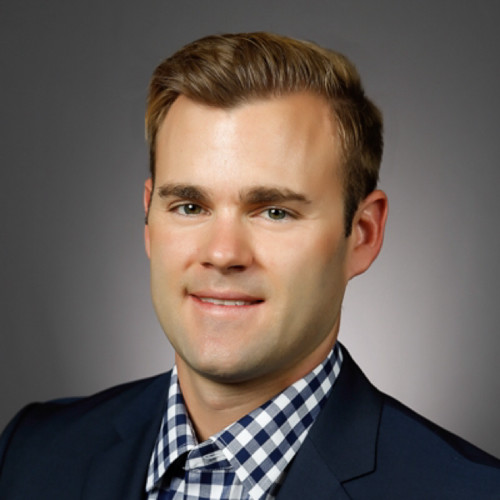
Clark Cave
CEO, Model Rewards
Clark Cave is an accomplished healthcare executive and entrepreneur with deep experience in both large and small organizations, as well as in developing software for the cash-based aesthetic industry. He specializes in areas like business development, operations, recruiting, and marketing. Currently, Clark leads Model Rewards—an innovative, Nextech-integrated patient engagement platform for aesthetic practices. By turning loyalty into data-driven growth, Model empowers practices to boost revenue, retention, and patient relationships through smart rewards and real-time insights.
Schedule a 15-minute demo of Model Rewards
Learn more about Model Rewards
Connect with Clark Cave on LinkedIn
Download Model Rewards, the patient loyalty rewards app
Heather Hughes Hardy
Aesthetics Sales Specialist
Heather’s passion for making aesthetic practices run smoothly has led her to find ways to improve efficiency, simplify things, and build great relationships within the wellness world. As she's grown in her career, she's developed a unique mix of business and management skills, along with a deep understanding of how things work in the aesthetics industry.
Follow Heather on Instagram @heatherhugheshardy or connect with Heather on LinkedIn
About Patient Obsessed
Patient Obsessed is the aesthetic practice marketing podcast that explores what makes people choose one doctor or provider over another. In a word, the conversion, the magic moment.
If you're doing something innovative to improve or disrupt the patient experience, we want to hear from you! To inquire about being a guest on Patient Obsessed, send an email to hello@theaxis.io.
Hear more episodes, get resources, or send us a messagehttps://www.patientobsessedpodcast.com
If you're a doctor or an aesthetic professional and have ever thought about doing your own podcast, you can try podcasting for free on our Meet the Doctor podcast. Schedule your recording session at https://www.meetthedoctorpodcast.com/ and listen to Meet the Doctor on YouTube, Apple Podcasts, Spotify, or anywhere you listen to podcasts.
Patient Obsessed is a production of The Axis https://www.theaxis.io/
Eva (00:00):
Welcome back to Patient Obsessed. This is the podcast that we rarely record, but when we do, it's important. I'm Eva Sheie, your host, and I've got my coworker with me, Heather Hughes Hardy, who is going to introduce herself and our guest, Clark Cave from Model Rewards. Heather, you go first.
Heather (00:18):
Yeah, my name is Heather. Like Eva said, I work with her and I'm also an independent consultant for aesthetic and wellness practices.
Eva (00:25):
And Clark, where do you come from? What do you do?
Clark (00:29):
My name is Clark Cave. I'm the founder and CEO of Model Rewards, previously Lamad, and we are in the loyalty marketing space for aesthetic medical practices in the United States and Canada.
Eva (00:43):
Well, I knew for a really long time that someone needed to solve those problems in the loyalty. And usually it came up in membership. That was where I ran into it a lot. But how did you get into this? What made you decide that this was a problem you wanted to solve?
Clark (01:01):
And around 2017, I was living in Washington DC and I went to a practice in Northern Virginia called Austin Weston. I don't know if I can mention them. And I spoke with a doctor there, a really awesome guy named Dr. Siegel. And I was pitching telemedicine at the time. And as we know, telemedicine never really took off or did anything. But I said, "How about telemedicine for plastic surgery?" And he said, "I don't think I'd be too interested in that, but just hang out. " I was serving in the military at the time and he's like, "Hang out, see if you can find some efficiencies." So ended up hanging out in the back room. They were using PatientNow, but I went through a ton of their consult records and essentially looked at the line that said, "How did you hear about us?" And I think of the hundred I counted, 60 to 80% of those were a friend.
(01:51):
So they didn't actually put a name. They didn't put anything on there. I said, "Okay, a ton of their volumes coming from word of mouth, but they're not measuring it, number one. And number two, they're spending about a million dollars a year on direct marketing." And I said, "There's got to be some level of disconnect here. So how do you incentivize referrals? You have to have some type of incentive structure around that. " So that's where the rewards program came from. And then when you start looking at what rewards programs actually do in American Express, why have they shaped their entire business model around rewards? You start to learn, okay, there's a secret to what loyalty programs can actually do for a practice. But that's how I started it.
Eva (02:34):
I have so many questions. I'm impressed that you noticed the how did you hear about us question? And this is one of the things I, if you know me at all, I complain about this often because the front desk or whoever answers the phone says, "How did you hear about us?" And then we document the answer somehow either with a dropdown or an open text field. And the answer a lot of the time is like, Google. Well, I didn't really hear about you on Google. I Googled something and I found something else. And I probably heard about you from a friend and they told me about you and then I Googled you and that's why I said Google. And so the data that we have for how did you hear about us has always been really interesting but not very accurate. I like that you're solving that problem.
Clark (03:26):
Let me really quickly just walk you through what the app does. So if we just imagine kind of a patient process, so the patient first walks into the exam room, not the exam room, but they walk into your office, you give them a wonderful first impression if they're a new patient or if they're an established patient, you greet them, they get their service, which is they, hopefully they get a really high quality, excellent service, and then they're at the checkout. If they haven't downloaded the app yet, you tell them to scan a QR code and they download model rewards. It's super simple, no passwords, which tend to complicate things. Basically enter their phone number and they're signed up for the software. So that is the time where hopefully we lock the patient into your practice. They receive a certain amount of points that they can use towards their next service.
(04:16):
And then sometime later that day, if they booked a service and they're integrated with Nextech, they'll get a push notification that says, "Hey, you have even more points at our practice." So once they open the app up, the first thing they see is a little credit card basically that has their number of points on there. So that is the switching barrier. Now, anytime they leave to go to another practice or do a practice switch, they now subconsciously know that they will lose money if they don't spend those points. So that's a super powerful tool. Every time they earn more points, as you guys know as your rewards members, you get a little dopamine hit that says, "Okay, now I have even more rewards to spend on future services." The next great thing about the app is, especially where you look at where your thumb is located on an app, the more important buttons are closest to your thumb, we put a referral button.
(05:10):
So front center on the mobile app, it says, "Earn more points if you refer friends." So you push that button and basically pops up any messaging app you want to send, you give another patient your referral code, they're able to sign up for the mobile app and bam, that takes away all of that hard work of trying to run a referral program. We have now tied one patient to another forever and you will always know, "Hey, this patient referred this patient." And you can generate reports and even see who the most referring patients are. So that solves that problem from the original Austin Weston where we don't know who referred you, we don't know how much they referred. We actually track how much referral revenue each patient has brought in, not over the lifetime, but just those first encounters. And then that final interaction with the front desk where they can tap into the recency effect as well, or you can mold behavior inside of the patient, which is, "Hey, do you want to earn extra points right now by booking your next appointment?" You have that opportunity if you want to do that, which is a really great way to incentivize getting them on the schedule or, "Hey, we need to get you back for an after photo.
(06:23):
So you've had these great results, but I need to get you back in three weeks for an after photo. So can I give you X amount of points if you come back for that after photo?" Which obviously, if you've ever listened to PracticeLand or listened to this before and after photos are absolutely vital, but we don't have an incentive mechanism to actually influence you to get back or nothing that's already structured. So this just makes that easy.
Eva (06:49):
So I can decide to incentivize anything I want and award my patient points?
Clark (06:55):
Anything except for Google reviews, apparently you're not supposed to do that.
Eva (06:59):
No, you can't do that.
Clark (07:01):
You can give people points for reviews, but you cannot give them points, you cannot influence them with reviews. So after the fact, I think that's legally sound.
Eva (07:12):
So I could say first 50 people to RSVP for our holiday event, get a 50 bonus points or toward whatever you buy at the event, something like that?
Clark (07:21):
100%. You can incentivize literally anything. One of our other practices just had, "Hey, get 20% points back." So the way we structure our points, by the way, is just like credit card cashback. So you get 20% points back if you want for buying gift cards. Anything you want to do to help shape your patient behavior. But sometimes that takes a lot of strategic thinking, which is just fun things to do once you have your points program up and running. But really the most important thing is just getting every patient you can signed up because that's what creates that switching barrier among your patients to take a second to say, "Hey, am I going to go to a new practice?" Because I always have a points balance. As long as I'm coming in and spending money, I will always have a points balance at your practice and it doesn't have to be exorbitantly high.
(08:13):
In fact, our evidence really shows we run pretty conservative and it's still very, very influential to keep patients returning.
Eva (08:21):
So it doesn't feel like I'm giving all this money away because I'm awarding all these points.
Clark (08:26):
I think that's one of those initial fears is, "Oh, they're just going to abuse it or they're going to want to ... " But most of our practices have universal setting around like 1%. So for every $100 a patient spends, they get one point, so $1. That has been really effective, just 1%. So the answer is no, you are not going to break the bank. In fact, I'll probably look at all the money you give away with promotions and you're not even coming close to that.
Eva (08:56):
Oh yeah. Well, that's a really good point because a lot of people are tired of running specials all the time and feel like they're on a big hamster wheel of coming up with specials and you're just blasting them out there and you have no idea if they're ... I mean, you know if they're working when people come in, but it's not very intelligent with the marketing tools that we have available today to just keep sending emails and posting Instagram posts about your specials when you could actually be rewarding loyal patients with special offers instead.
Clark (09:33):
Yeah. I think that's that other secondary piece where, I don't want to say you're doing it wrong, but a lot of practices-
Eva (09:41):
They're doing it wrong.
Clark (09:43):
You're doing it wrong. There's no data driving those decisions for a promotion. They just say, "Hey, let's just promote this thing, put their finger in the air and say, okay, well, the winds belong this way." But with any promotion, I guess there's no way to avoid this, but you're always going to get patients who would've made those purchases anyway, now just getting whatever 20%, $200 off X, Y, or Z. One thing our software can definitely help with is kind of bucketization to say, "These patients are toxin patients or these patients are laser patients. How do we move them from something that they're already purchasing into something that they wouldn't have otherwise purchased?" So I feel like there's a pretty big hole in the market and that makes a lot of decisions easier, especially when it comes to promotions.
Eva (10:35):
So wait, are you saying that I can go in and send an offer to a Botox or a Dysport patient to try something else, but I can just send it to that group of patients?
Clark (10:49):
Yes.
Eva (10:50):
How do they get it when you send it out?
Clark (10:53):
Push notification and email.
Eva (10:55):
They get an email?
Clark (10:57):
Yeah, through our system.
Eva (10:59):
I never knew that. I wonder what it looks like.
Heather (11:02):
This triggers a thought for me too, because if I never had to create another promotion again and things ran smoothly, I would be so happy because you want to know what the worst thing is. A practice that I worked with, they did an annual special, which I think is still a good thing to do and it's a great tactic, right? But what we constantly ran into is then for like weeks following, people were so mad that they had just gotten X, Y, Z treatment and now it's on special and it's this whole thing. And they're like, "I want you to match this, " or, "I want to cancel my purchase and repurchase it. " And it's like, what I'm hearing here is that essentially you just have recurring incentive. Every purchase is an incentive. There's no need for these big, huge, extravagant specials that you have to make up month after month that then somebody wants you to honor or go through this hoopla of making sure that X, Y, Z happens.
(12:03):
And that's something that does stand out to me when I'm thinking about getting Lyft off of my plate is not having to worry about all of those patient calls and like, "Oh, just honor it for this one. And then this person calls in and their friend got X, Y, Z." So the fact that you could just get those recurring points that always bring you back, it also reminds me of when I was growing up, my mom loved Kohl's Cash. I don't know if y'all have ever been to Kohl's, but that was her thing. She would go buy her clothes, she would get all of her Kohl's cash, and then she went back into the store and used her cash. And she always bought more than the Kohl's cash that she brought in. And part of me, when I think about that, I'm like, "Is that the target audience?" But I can tell you from experience, she's had surgery, she's had plenty of treatments.
(12:51):
She goes in and she likes those incentives of like, "If I'm spending money, I'm also getting money back." And it just keeps repeating the cycle.
Clark (12:59):
What you just mentioned, super interesting, and that is what I found in the data. So when I went back through, like I was talking about earlier, when I went back through and saw what were the purchase behaviors, even before a patient signed up for rewards and after the patient signed up for rewards, the spending per encounter increased, the number of services purchased increased, and the number of times they returned over a three-year span increased. It blows your mind. It's magic. I can't describe it any other way. I went through the data for months and months and months and hours and hours and hours. And I said, "I'm doing something wrong. I'm pulling this the wrong way." And over and over and over, I was able to verify, "Ah, I see why loyalty programs are so popular." Yes, they don't want patients to switch, but they are incredibly profitable.
Eva (13:55):
You reminded me of another really important patient experience aspect that I've been fixated on. It just happened to me again today where I keep getting these offers texted to me from a practice and they're not relevant to me at all. And every time I have unsubscribed, I stop getting all the other texts that I do want. So I don't get my appointment reminders, I don't get my transaction notifications, I get nothing. And so the first time that happened, I unsubscribed because they kept texting me nude images to my phone, which I don't want. And so I said, "Stop." And it unsubscribed me, but they're misusing their system. And so if you're the software decision maker or the marketing decision maker and you're able to separate transactional notifications like appointment reminders from marketing, you're not getting marketing analytics from your transactional system either. And also I'm pretty sure it's illegal and they just don't care that it's illegal.
(15:03):
They're like, I'm just going to say they just don't know. I don't think they're being malicious, but there's a reason that you use the right system for the right function and that's one of those big, big ones.
Heather (15:16):
I was recently talking with a good friend of mine who's an injector and she was telling me, she was like, "I had this crazy idea, but when you hear it, you're going to be like, That's so dumb. It's so simple. And she was telling me about how they have a influencer program and how they go through all of this work to vet their influencers, make sure that they have a good following, do all of these different things. Then they have them come in, they get really great content, but they have no way to measure how it actually impacts the practice. So her suggestion was, we'll give them a code. That's how every other brand does influencer marketing. And it's so interesting. I've noticed that all of the plastic surgery, all of the aesthetic pages that I follow, and I follow them nationationally just to kind of see what's going on, I rarely see an influencer posting any type of code for their plastic surgeon or the med spa that they go to, which is so interesting to me.
(16:14):
So I'm curious if there's a reason why people wouldn't or shouldn't do that. And then the other thought that I have is like, there are so many want to be influencers and not like want to be like they can't be it, but like they really want to do that. And what an easy lift it would be to post your code and have that proof of evidence of like, "Hey, I post this code and I've gotten all of these rewards back. It's clear that my content, like what a nice little profile stitch you could have. " So I'm just curious, A, if there's a reason why you couldn't or shouldn't do that for a medical practice, and B, why more people aren't doing it if it's okay.
Clark (16:50):
But wait, there's more. So once again, this is kind of what we built model rewards on top of. Just one person saying, "Hey, you should go to this place that I just went to. " I mean, some practices, it can earn you up to, I mean, $80,000 or even more if you take into consideration the lifetime value of a patient in plastic surgery, I think I heard it's $144,000 over the course of someone's lifetime. If Heather refers Eva and Eva goes into a plastic surgery practice, Heather, you didn't just get her that first visit. If she loves it, you just made that practice $144,000, which is, I mean, it's asinine. So obviously every patient gets a referral code, but every staff member that signs up also gets a staff member app and every staff member gets a referral code. And we have something really fun among the staff members.
(17:45):
You have a leaderboard inside of the mobile app that shows, "Hey, who's the top referring staff member?" And I also think that speaks to your practice as well to say, if your staff were referring people to your practices and actors, that means you have a really healthy culture, I think, especially, "Hey, mom, I would refer you or, hey, best friend, I would refer you to get a procedure done by this plastic surgeon I work with. " That says a lot because I've seen practices where it's like, "I would never send my friend here." So that's also probably an indicator that you might want to change something or staff or whatever, jobs maybe, but the influencer program ... So we also have an influencer program, super simple. The influencer gets something like the staff app where they just give away their referral code. And I think there's even a lot of practices who say, "Hey, will you post for us or will you do this for us?" But you don't ever really know the return on investment.
(18:43):
You're just paying them money. Whereas with us, we can show you everyone they referred. So we can actually show everyone who downloaded the app using their referral code. And if they bring in revenue, you can do some type of profit share or you can make them a 1099 or whatever, but you know that your marketing dollars were actually, they were validated and they were well spent.
Eva (19:07):
It sounds like you're taking all the work out of even coming up with an influencer program. It's just right there built in and ready to go.
Clark (19:17):
From what I can tell, as long as the referral program for the influencer program's super simple, I mean, it's just a super simple sign up. So all the work's out of it. You still have to deal with the influencer which you hear some stories, but it is what it is.
Eva (19:33):
Well, you would not have to figure out how to prove that they're doing something like just let the results speak for themselves.
Heather (19:41):
And then also every single patient that you have could be an influencer and they're a micro influencer. If I could earn my next facial, why wouldn't I?
Eva (19:53):
Why do you think so many practices don't do loyalty?
Clark (19:58):
I think to Heather's point, it's not the glamorous thing. The glamorous thing is to spend the money, to get Google Ads, to get the clicks or get new people in the door. And I think a lot of modern tools are really just set up for that. And I don't think there's a lot of modern tools that say, "Hey, 30% of your patients didn't return this year." Or what we do, we show, "Hey, here's all the new patients you've had that only came in for one visit that never returned."
Eva (20:33):
And then what can you do with them?
Clark (20:36):
You can start a loyalty program and then watch that number shrink or now you've got to ... I mean, you do have a list of prospects and those are the people you do try to get back in the door because really you did pay for the ... You paid whatever your cost of acquisition is for those patients. So let's say it's 1150 per patient or $100 per patient. You did spend a lot of money-
Eva (20:59):
I think it's 100 or 150.
Clark (21:02):
What do you think? What do you think the average cost of acquisition is?
Eva (21:05):
I think in plastic surgery, it's 500, 1,000. It's very, very high.
Clark (21:11):
So if I showed you that, well, I need to enter that into the equation because if that's the case, it's almost criminal because I have little ... My bar chart shows this. All the blue is your established patients and all the red, the red cap is your new patients that have been left on the table 2023, 2024. It's criminal not to try to get them back, I guess. And you need some type of mechanism or some type of medium to get them back in and rewards, you could try to promote CoolSculpting to them again, or you could start a rewards program, which would probably be ... That's true. I see that as the most effective. And you can target them to say, "Hey, sign up. We'll give you this many points since we haven't seen you in a year, here's 50 points or 100 points to come back in.
Eva (22:00):
You didn't ask me why I think it's hard, but I'm going to tell you anyway. It would be easy to have a loyalty program if you knew that it was easy and it wasn't going to cause you a bunch of extra work. But as the person on the marketing side, especially externally not working in the office, finding the segments, acquiring the segments, and then reaching the segments with email, it's still worthwhile, but the numbers continue to get smaller and email continues to get more difficult. And just the step of acquiring the segment, the list of people who I want to talk to is virtually impossible. And I don't know a single EMR that will export first, last email as one report. And so when I ask a practice, "Can you get this for me? " They have to call support to get it, and then someone has to do a VLookUp merge to put the two together, and then they have to send it back to me, and then I have to run it through a balance checker, and then I have to put it in the system, and then I have to send them a message.
(23:04):
And then they have to be in the engaged audience, so I have to get them to open the mail, or I can never send the mail again. And I mean, you're already falling asleep with my describing the steps because that's how hard it is now. So I know I asked you recently, "Can you get me a segment?" And it was a really complex segment, and you were like, "Sure, that's easy." And you had it over to me in a minute, and I was like, "I'm done." I mean, from the data side as a marketing person is a game changer.
Heather (23:37):
Speaking from the patient side of that too, or the consumer side, having someone sending a beautiful marketing email, you want to know where that goes to my promotions folder that I never opened that Google filters out for me. So the fact that it would push notify me, even if I wasn't going to go look it up like I normally do on my scrolling to Instagram, I would see it as a notification and it might pique my interest. Whereas if it's an email, I'm never going to see the subject line. You might have the most clever subject line, I would never see it. It's in a hidden folder that I don't look at.
Clark (24:10):
That's tough.
Eva (24:11):
It is. It's rough. What are some other unconventional ways you've discovered through working with practices that ... Is there anything else that surprised you are able to do easily with the app?
Clark (24:25):
One practice told me as a practice in Charleston that they like knowing who their VIPs are. And that's pretty much when their patient walks in the door, they can look up and see which patients are coming in and they're able to see who their high value patients are versus those who aren't their high value patients. It helps them appreciate, okay, this patient has actually spent a lot of money with this because especially their loyalty status values are really, really high. So this patient has spent, I don't know, 16, 17, $18,000 at our practice. So just on a human level, I feel like that's a nice thing to know. I'm like, "Okay, you've done a ton for us. Why don't I just walk up and shake your hand?" I don't know. You don't do that in practice, but you do say, "Hey, Cheryl, it's really wonderful to see you back here."
Eva (25:18):
The cynical side of me is saying sometimes the people who act like VIPs aren't the actual VIPs.
Heather (25:24):
So true.
Clark (25:27):
You can do a quick assessment and you can even say, "Okay, this person actually referred X, Y, or Z." And within a second, you can just look that kind of stuff up. If you really want your practice to thrive, you actually do do that due diligence and you say, "Hey, I really appreciate you talking about us." I mean, that's super important. It helps us grow. We love the patients you're referring to us. We're so grateful or look at how many people they've referred and say, "This is huge. Once again, plastic surgery practice, you refer four people, you've just given us a half a million dollars over the course of a lifetime, which is a not insignificant number."
Heather (26:08):
That just triggered a thought in my head too, which is that big spender is an incredible person to reward, right? But if I'm Suzie down the street that doesn't have a lot of money to spend, but I'm sending you patient after patient after patient because I'm a hairdresser or I'm a server and I'm telling everybody about my injector, you want to reward me even if I'm not the one spending big money, I'm sending big spender after big spender, which that literally just clicked in my head, light bulb moment.
Clark (26:36):
100%. One of the early pieces of literature that we started this business on was an Harvard business review article called The Value of Word of Mouth, where it said, "What's the value of word of mouth?" And it put customers into these quadrants of lifetime value on the why, how much they spend, are they lower or high, and then the referral value on the X axis. And obviously you want people to spend more and refer more, but they did a lot of research. There's a lot of people, they may not spend a lot, but they'll refer a time to your practice. And just to your point, those are those types of people. We were able to categorize that and incentivize that. "Hey, you just referred a ton of people to our practice. If nothing else, let me give you a phone call or let me do something nice.
(27:32):
Let me send you Harry and David something this year because you've just brought in however much money, small price, tiny thing that goes a long way.
Eva (27:43):
The question of who's our VIPs is usually something that takes everyone on staff a lot of time to answer because they have to go out and ask every single provider," Who's your VIPs? "You can find it in the data, but sometimes you don't ... I mean, the reality is you might have a list. There's probably people on that list who you don't necessarily want to encourage either. So I think anywhere that you can find answers faster is going to help move things in the right direction.
Clark (28:16):
You know what? You just gave me a great idea. I'm going to send every practice their top spenders and top refers.
Eva (28:23):
That's a great idea.
Clark (28:24):
They should know that, but I'm going to make it easy for them. Yeah.
Eva (28:30):
That's a great report. Everybody would open that. I'd love to see that.
Clark (28:33):
Yeah. Say," Okay, because you should. Hey, you spent this much with us this year. Let me send you a $50 Harry and David, or do people use that? I don't know, whatever. Send you pears.
Eva (28:46):
I think if you want to bring it full circle, the problem is you don't have a systematic way to say thank you. And now if we're able to use model rewards to do that, we can say thank you and we can prioritize the way and the method of saying thank you to these people who we are so grateful for.
Clark (29:04):
Yes. And so I think New Year's 2026, everyone should start a loyalty program. It doesn't have to be mine, but I would like it to be mine.
Eva (29:16):
Well, speaking of not yours, there are several other ... I mean, I don't want to go too deep into it. I think it's probably such a worthwhile topic that we should come back and talk about membership versus loyalty versus some of the more complicated programs that say they're loyalty because there have been a lot of people who've tried this over the years. And I think just as an outside observer, I would say most of them have just been too complicated to be successful. Anything that drives loyalty is a good thing, but implementation and the reality of what people will and won't do has to be also taken into account. If you were to briefly give us advice about what to look for Or in a loyalty program or perhaps a void in a loyalty program software. Are there some big bullet points you can share?
Clark (30:11):
Big bullet points, I think in terms of loyalty, there are programs out there that I know of that are very, very hard to use. And one consultant said, "There are programs out there where you may have points, but you don't know how to access how many points you have. You have no idea how many points you have. " So I think that's kind of a hard sell. However, what we've learned, even just a baseline amount of just something as simple as just giving the patient points. And this was kind of the learning that took many, many years to develop where we started so big and we wanted to do so many things and all to just kind of whittle it down to the understanding that if you give patients points on purchases, you will see a dramatic shift in your patient behavior, especially when you start measuring the core KPIs that we measure, which overall revenue per encounter and services per encounter, you start to see a shift.
(31:14):
I think to Heather's point, you start to buy more knowing that, "Hey, I went to Kohl's for a pair of shoes, but because I had points, I got these leggings, I got $30 off these leggings." So they were basically free, right? Because that's what you see. It's basically free because you were able to pay for points because whenever my wife tells me what she bought, she doesn't tell me how much the overall cost was. She tells me how much she saved. And so that's how it works out. And it really does work to the practices favor. And I also don't feel bad about it because you start to see most practices, if they have their patient's best interest in mind, it means you're going to be able to get them a better service and a better outcome because toxins by themselves are great, but toxins with HydraFacial or other lasers or microdermabrasions, these other things that have proven to give you excellent outcomes, these are what you want your patients to have the best outcome possible on their budget, but if this helps influence them to ... They may spend a little more money, but they're going to get an overall better outcome.
(32:27):
I think that's what you want because tying back to the referrals, your patients are walking advertisements. So the better their outcomes are, the more likely for a referral to actually convert.
Eva (32:41):
How can we get a demo?
Clark (32:43):
If you just go to modelrewards.com, please book a demo and we'd be happy to walk you through it.
Eva (32:49):
Any final thoughts, Heather?
Heather (32:51):
Yes. I think we should do something somewhere about a hack for injectors or providers that want to get busy. Literally, I was sitting here thinking like, "Ugh, I so wish Jenna had this, " because she could go to the brow artist down the street and give her her code and she could refer all of her clients and that brow artist could earn so many points. She could choose a community person near her that she could share that would then be rewarded and incentivized to come in and also just get free money. So some type of hack to get busy and using your community around you, it doesn't have to just be patient referrals.You could do this as community marketing and reward your other small business people that are in the area. Yeah. But that's a side note.
Eva (33:44):
We're going to have to make a folder or playlist or something of the unconventional ideas or the 99 brilliant ways we use Model Rewards that Clark didn't intend us to. Right.
Clark (33:59):
That's great.
Eva (34:00):
Plug and play. Really, I think it's a sign of great software is that it enables you to do what you want to do. It's not forcing you to do it the way it thinks you should do it.
Heather (34:12):
So true. I wonder too if you couldn't ... So if you do actual ads or things like that, choosing those different things, those different angles that a practice might come in for. So maybe they're really into influencer marketing or maybe they're like ... All of these things, obviously the goal of it is the main core piece, but there's so many different avenues that they could plug into this because it solves so many different problems. It's very cool.
Clark (34:38):
Okay. Knowing what you know now, what are the reasons why someone wouldn't want to have a loyalty software?
Heather (34:45):
Because I don't believe you, and I think that it's going to be harder to implement than you're telling me.
Eva (34:50):
I think the only hurdle is they don't understand it. They know they need it. They don't know that it can be this easy. And in some cases, they've tried something else and they've been burned already and they don't really want to stick their toe in the water again, unless they're sure it's not going to make their lives harder. Thanks, Clark. You have built something awesome. We are going to try to tell as many people as we can and you're going to have to come back on the podcast tomorrow.
Clark (35:16):
Will do. Let's do it.
Eva (35:20):
Thanks, Heather.
Heather (35:22):
Thanks guys.
CEO, Model Rewards
Clark Cave is an accomplished healthcare executive and entrepreneur with deep experience in both large and small organizations, as well as in developing software for the cash-based aesthetic industry. He specializes in areas like business development, operations, recruiting, and marketing. Currently, Clark leads Model Rewards—an innovative, Nextech-integrated patient engagement platform for aesthetic practices. By turning loyalty into data-driven growth, Model empowers practices to boost revenue, retention, and patient relationships through smart rewards and real-time insights.